
Fasting blood glucose: the thresholds to know
Normal fasting blood glucose sits between 0.70 and 1.00 grams per litre of blood in an adult with no known condition.
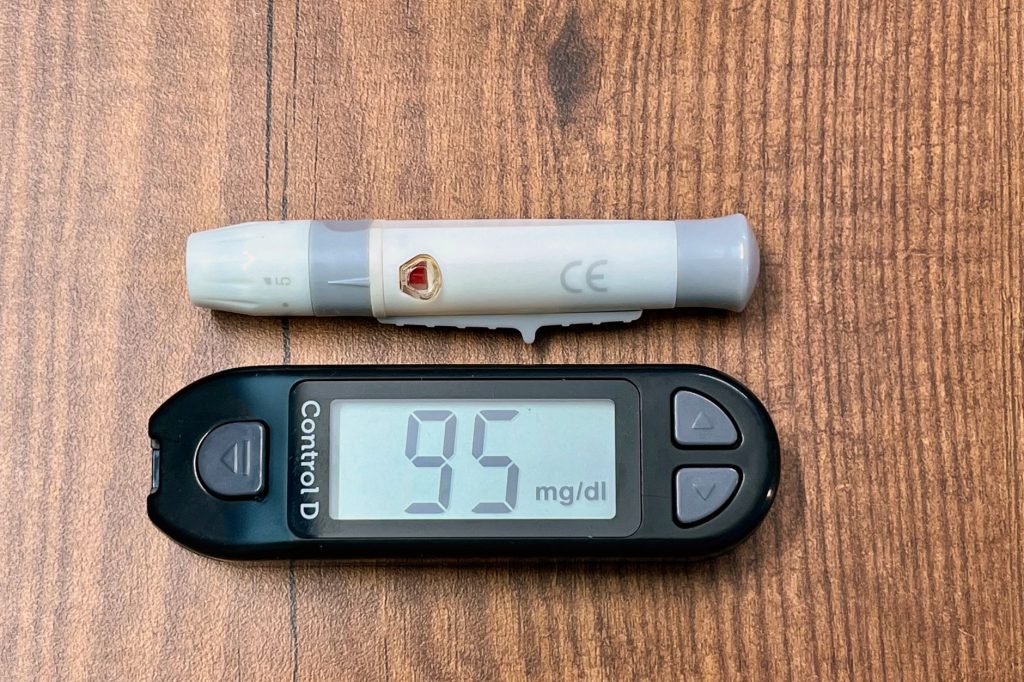
By Benjamin Sant · Updated 29 September 2026
Normal fasting blood glucose sits between 0.70 and 1.00 grams per litre of blood in an adult with no known condition. Above 1.00 grams per litre, and up to 1.25 grams per litre, doctors speak of moderately raised blood glucose or prediabetes, a state that is still reversible in most cases. Past 1.26 grams per litre, confirmed on two separate samples, a diagnosis of diabetes can be made. That value, measured after eight to twelve hours without eating, reflects the body’s capacity to regulate glucose overnight, a function that degrades gradually with age, sedentary life and chronic stress, often well before any visible symptom appears.
You may have received a panel with a fasting blood glucose of 1.05 or 1.10 grams per litre, a figure the laboratory does not even flag in red, and yet one question stays in your head. That value, still in the so-called high-normal zone, says nothing on its own: it makes sense as a trend, year after year, and in relation to other markers such as waist circumference or the lipid panel. Many senior managers and executives discover that figure during a routine panel, with no particular symptom, and hesitate between ignoring it and worrying about it. This article sets out the thresholds, the common causes, the levers that work, and the point at which seeing a doctor becomes necessary.
What does a high fasting blood glucose actually mean?
High fasting blood glucose means the liver and muscles can no longer regulate the glucose released overnight efficiently, often because the cells respond less well to insulin. That mechanism, called insulin resistance, sets in gradually, sometimes over several years, with no pain and no obvious fatigue at the start. The pancreas compensates by producing more insulin, and that keeps blood glucose in an acceptable zone for longer than you would think. It is precisely that delay which makes the problem silent: the morning figure stays correct while the body is already running on overtime. To go further, what insulin resistance announces before blood glucose rises is detailed by the School of Longevity.
Metabolic flexibility, meaning the body’s capacity to shift efficiently from using glucose to using fat depending on need, plays a central role in that regulation. A study published in Cell Metabolism set out that mechanism in detail and showed how far its decline often precedes the abnormalities visible on a standard blood panel, Metabolic Flexibility in Health and Disease. In practice, someone whose metabolic flexibility is declining will find it harder to mobilise their fat as fuel, and that encourages abdominal storage and, indirectly, the gradual rise in fasting blood glucose.
An isolated figure of 1.08 grams per litre therefore does not mean much without context. The decisive element is the trajectory over several years, combined with waist circumference, blood pressure and triglyceride level. A 48-year-old man with a growing waist and blood glucose climbing from 0.92 to 1.04 grams per litre in three years has a far more concerning profile than someone stable at 1.00 grams per litre for ten years. It is that dynamic that doctors and metabolic health coaches look at first, more than the raw value of a single panel.

Which thresholds and markers really need watching?
The reference thresholds for fasting blood glucose are well established, but they gain relevance when crossed with other markers from the same blood panel. HbA1c, which reflects the average blood glucose of the last two to three months, usefully complements a single fasting measurement that can vary from one day to the next depending on sleep or stress. Waist circumference, often neglected, is an early indicator of insulin resistance, sometimes visible before any blood abnormality. The triglyceride-to-HDL ratio also brings valuable information about overall metabolic health, beyond the blood glucose figure alone.
| Marker | Unit | Optimal zone | Warning zone | Source |
|---|---|---|---|---|
| Fasting blood glucose | g/L | 0.70 to 0.90 | above 1.26 (diabetes) | Standard clinical reference points |
| Intermediate fasting blood glucose | g/L | 0.90 to 1.00 | 1.00 to 1.25 (prediabetes) | Standard clinical reference points |
| Waist circumference, men | cm | below 94 | above 102 | Standard clinical reference points |
| Waist circumference, women | cm | below 80 | above 88 | Standard clinical reference points |
This table gives reference points, never a diagnosis. A single value slightly outside the optimal zone does not mean a condition, especially if it is isolated and stable over time. On the other hand, an accumulation of two or three markers in the warning zone at the same time deserves a thorough conversation with a doctor. To go further on reading a whole blood panel after 45, the article reading your blood test after 45 details how to interpret each line beyond standard thresholds, and the article devoted to cholesterol and metabolic health completes the reading of the other markers on the panel.
Which causes explain a rising fasting blood glucose?
Several causes explain a gradual rise in fasting blood glucose, and diet is only one of them. Lack of sleep is among the most underestimated factors: a shortened or fragmented night increases insulin resistance from the next morning, an effect that is documented and reproducible. Chronic stress also acts directly on blood glucose, via cortisol, which stimulates the release of glucose by the liver, even outside meals. Sedentary life, finally, reduces the capacity of muscles to take up circulating glucose, a mechanism that worsens quickly after several days without physical activity.
Alcohol deserves a separate mention, because its effect on blood glucose is often misunderstood. Regular consumption, even moderate, disrupts overnight glucose regulation and can distort the reading of a morning panel, a phenomenon documented by Inserm in its dossier on alcohol and health, Alcohol and health dossier. Many executives who drink one or two glasses of wine almost every evening discover, by stopping temporarily, an improvement in their fasting blood glucose that they had not linked at all to a habit installed over years without a second thought.
Intermittent fasting is often presented as a universal solution, but its effect depends heavily on the starting profile. A study published in Cell Metabolism on a ten-hour daily eating window showed improvements in weight, blood pressure and blood lipids in people who already had metabolic syndrome, Ten-Hour Time-Restricted Eating Reduces Weight, Blood Pressure, and Atherogenic Lipids in Patients with Metabolic Syndrome. That does not mean the method suits everyone without support, particularly with chronic fatigue or hormonal disorders already present, where a medical opinion remains preferable before changing your meal times.

How does a personalised programme make the difference?
A personalised programme lets you cross several markers and several lifestyle habits rather than reacting to a single isolated figure on a panel. Many people arrive with a result that looks almost normal, a fasting blood glucose of 1.03 or 1.06 grams per litre, and a diffuse fatigue they cannot connect to that figure. A simple adjustment to sleep, diet or physical activity, carried out with no measurement and no follow-up, rarely gives visible results quickly, because each person responds differently depending on their metabolic and hormonal history.
You may arrive with a panel your doctor considers normal, a fasting blood glucose of exactly 1.00 grams per litre, right on the limit, and a feeling of fatigue in the middle of the afternoon that nothing specific explains. That kind of situation, common in executives aged 45 to 55, illustrates well the value of crossing several markers rather than trusting a single result judged acceptable on paper. Structured follow-up, with measurements repeated at regular intervals, shows whether the trend is improving or worsening, a movement a single annual panel cannot show.
That is precisely the aim of the programme at Elite Longevity, with a dedicated team, a tracking app and biomarkers re-measured over time across three to twelve months depending on your goals. The point is not to pile up generic advice, but to identify the two or three levers that really matter for each profile, then to check their effect on concrete data rather than on a vague sense of feeling better. This approach also ties in with the issues covered in the article on biological age and its key markers, where blood glucose holds a central place among the indicators tracked over time.
Which concrete levers really bring blood glucose down?
Three concrete levers have a measurable effect on fasting blood glucose when applied consistently over several weeks. The first concerns physical activity, particularly strength training, because muscle is the main storage site for glucose in the form of glycogen. Two strength sessions a week, targeting the large muscle groups, improve insulin sensitivity durably, an effect documented in the article strength after 50, two sessions a week. The second lever concerns meal structure, with particular attention to the order of foods and the presence of fibre and protein at every meal rather than calories alone.
The third lever, often underestimated, concerns sleep. Sleeping less than six hours a night repeatedly increases insulin resistance from the following day, a mechanism confirmed by several bodies of work on fasting and metabolism, notably a review published in Disease Markers on the effects of fasting on human metabolism and psychological health, The Effect of Fasting on Human Metabolism and Psychological Health. Seven hours of sleep is a realistic floor for most active adults, a threshold detailed in the article on sleep after 45, seven hours as a floor. Neglecting that lever often means cancelling the benefits obtained elsewhere on diet or exercise.
These three levers work in synergy rather than in isolation. Someone who improves their sleep without changing their diet will see a partial effect, just like someone who trains hard without sleeping enough. Consistency counts for more than one-off intensity: better two strength sessions held every week for three months than an intensive week followed by two months off. It is that consistency, measured and adjusted over time, that produces visible results on a follow-up blood test, generally between eight and sixteen weeks after the changes begin.

Should you see a doctor, and how do you interpret the result?
Seeing a doctor becomes necessary as soon as a fasting blood glucose goes above 1.00 grams per litre repeatedly, or as soon as it comes with other signs such as unusual thirst, marked fatigue or unexplained weight loss. A health professional can request an HbA1c measurement, more stable and more representative of the trend over recent months, before making a diagnosis. They can also assess other risk factors, such as a family history of diabetes, which change how the same figure should be read from one person to another. A man with no family history at 1.02 grams per litre does not have the same risk profile as a woman with several cases of diabetes in her family at the same figure.
Interpreting an isolated result also calls for caution about one-off factors that can distort it. A sleepless night, a recent infection, an episode of intense stress or even a course of corticosteroids can temporarily raise blood glucose without that reflecting an established metabolic problem. It is also worth remembering that some biological factors differ between men and women in metabolic regulation, a point raised by Inserm in its dossier on gender and health, Gender and health dossier. That is why a second measurement at a distance, under calm conditions, remains the best way to confirm a trend before worrying or changing your habits.
The course of action, once a result in the warning zone is confirmed, is to structure action over three months rather than multiplying isolated changes with no follow-up. That means choosing two or three precise levers, holding them consistently, and measuring the same markers again within a reasonable time to objectify the movement. That is exactly the approach taken at Elite Longevity, where every pathway starts with a full picture before defining the priorities specific to each person. The simplest starting point remains a 30-minute call, free and with no commitment, to assess your situation and decide whether a full assessment is the logical next step for you.
Sources
- Metabolic Flexibility in Health and Disease, Cell Metab, 2017
- Ten-Hour Time-Restricted Eating Reduces Weight, Blood Pressure, and Atherogenic Lipids in Patients with Metabolic Syndrome, Cell Metab, 2020
- The Effect of Fasting on Human Metabolism and Psychological Health, Dis Markers, 2022
- Alcohol and health dossier, Inserm
- Gender and health dossier, Inserm
Going further
- cholesterol and metabolic health, what the two have in common
- spotting silent inflammation on a blood test
Frequently asked questions
What is the normal value for fasting blood glucose?
In an adult without diabetes, fasting blood glucose generally sits between 0.70 and 1.00 grams per litre. Between 1.00 and 1.25 grams per litre, it is called prediabetes or moderately raised blood glucose to be watched. Above 1.26 grams per litre on two separate blood tests, a diagnosis of diabetes can be made by a doctor.
Why is my fasting blood glucose high when I do not eat sugar?
The liver releases glucose overnight to keep the brain supplied, and that mechanism intensifies with stress, lack of sleep or emerging insulin resistance. High blood glucose with no visible excess sugar often reflects a hormonal imbalance or sleep debt rather than one isolated dietary mistake.
Is a slightly high fasting blood glucose serious?
A value slightly above the norm is not an emergency, but it deserves attention because it often comes several years before established diabetes. It generally corrects well with adjustments to diet, physical activity and sleep, provided you act early and talk it through with a doctor.
How long does it take to bring fasting blood glucose down?
Adjustments to diet and physical activity often show a measurable effect in eight to twelve weeks on a follow-up blood test. Consistency counts for more than intensity: moderate efforts held every week give better results than a radical change abandoned after a fortnight.
How long should you fast before the blood test?
The fast recommended before a blood glucose test is generally eight to twelve hours, water allowed. Eating, drinking sweetened coffee or even chewing gum within that window can distort the result, hence the value of scheduling the sample early in the morning after a natural overnight fast.
What should you do concretely after an abnormal fasting blood glucose result?
The first step is to repeat the measurement to confirm the value, because an isolated result can be influenced by stress or a recent infection. Then a conversation with a doctor places the figure within a wider panel, often including HbA1c and the lipid panel.
Latest from the blog
Read next
 Omega 3: benefits for inflammation and immunity
Omega 3 benefits for inflammation and immunity: mechanisms, biological thresholds, mistakes to avoid and a clear plan for busy executives.
Read the article
 Omega-3: which foods to favour against inflammation
Omega-3 is found mainly in oily fish from cold seas, such as sardines, mackerel, herring and salmon, and in certain…
Read the article
 Low HDL cholesterol: what it says about metabolism
Low HDL cholesterol means a level below 1 gram per litre of blood in men and 1.2 grams per litre…
Read the article