
Low HDL cholesterol: what it says about metabolism
Low HDL cholesterol means a level below 1 gram per litre of blood in men and 1.2 grams per litre in women, a threshold below which reverse cholesterol…

By Benjamin Sant · Updated 5 November 2026
Low HDL cholesterol means a level below 1 gram per litre of blood in men and 1.2 grams per litre in women, a threshold below which reverse cholesterol transport works less well. That mechanism normally carries excess cholesterol from the tissues and arteries back to the liver, so that it can be eliminated. When it runs slow, cholesterol is more likely to build up in the vessel wall, and cardiovascular risk rises gradually, even when total cholesterol stays within range on paper.
That low figure almost never comes alone. It most often belongs to a wider picture: a waistline that has widened, a slightly high fasting blood glucose, rising blood pressure, a sedentary life settled in over years of dense working life. An executive who spends twelve hours a day on their feet, or a manager who strings together business lunches, can very well show a broadly acceptable lipid panel with this one marker out of step. The point of this article is precisely to take that figure out of isolation, to understand what it says about overall metabolic health, and which concrete levers let you act on it without waiting for a heart problem to react.
Why does low HDL signal a wider metabolic imbalance?
Low HDL works as an early indicator, often more telling than total cholesterol or even LDL taken on its own. It generally reflects an excess of visceral fat, the fat stored around the abdominal organs, which disrupts the liver’s production of lipoproteins. The liver, overloaded with triglycerides, makes fewer functional HDL particles and more small dense LDL particles, which are more likely to infiltrate the artery wall. That combination has a precise name, the atherogenic lipid profile, and it turns up frequently in people who show no visible symptom otherwise.
The article devoted to non-HDL cholesterol details how that composite marker captures all the potentially harmful lipoproteins, LDL included, in a single figure. Low HDL combined with high non-HDL cholesterol draws a clearly more concerning metabolic terrain than a simple isolated figure. That cross-reading is precisely what the Haute Autorité de Santé recommends in its work on assessing overall cardiovascular risk, which insists on interpreting several lipid parameters together rather than a single threshold considered alone (Good practice recommendations, Haute Autorité de Santé).
In programme practice, we regularly meet people whose panel looks reassuring at first reading: total cholesterol fine, LDL within range, and yet a chronic fatigue that nothing explains. Digging into the detail item by item, low HDL combined with triglycerides at the upper limit reveals a metabolism that handles energy badly, long before general blood work shows it clearly. That situation shows why a panel that looks normal sometimes deserves a finer reading, marker by marker, rather than a hasty conclusion based on the average of the figures.
| Marker | Unit | Optimal zone | Warning zone | Source |
|---|---|---|---|---|
| HDL, men | g/L | above 1 | below 0.4 | Haute Autorité de Santé |
| HDL, women | g/L | above 1.2 | below 0.4 | Haute Autorité de Santé |
| Triglycerides | g/L | below 1.5 | above 2 | Haute Autorité de Santé |
| Waist circumference, men | cm | below 94 | above 102 | Santé publique France |
| Waist circumference, women | cm | below 80 | above 88 | Santé publique France |
| Fasting blood glucose | g/L | below 1 | above 1.26 | Haute Autorité de Santé |
Does waist circumference influence HDL more than total weight?
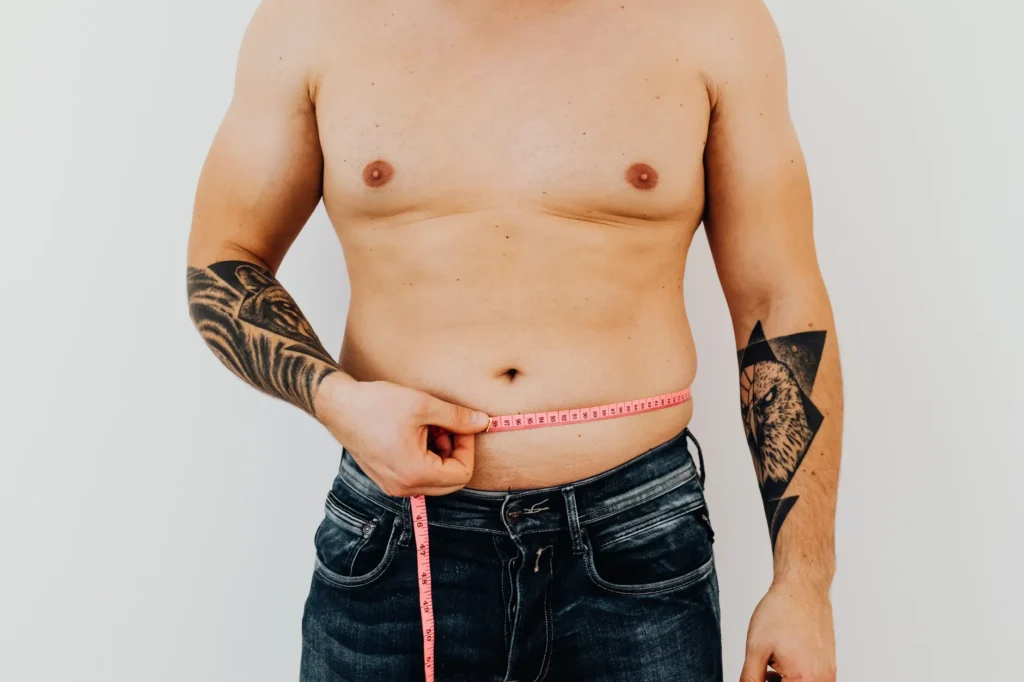
Yes, the distribution of body fat often counts for more than the weight shown on the scales. Two people with the same body mass index can show very different lipid panels depending on whether their fat sits mainly under the skin or around the abdominal organs. Visceral fat, the kind that swells the waistline without necessarily showing on an otherwise athletic silhouette, releases fatty acids straight to the liver through the portal vein. That constant liver exposure encourages triglyceride production and mechanically penalises the manufacture of functional HDL.
Santé publique France uses waist circumference thresholds associated with increased metabolic risk, above 94 centimetres in men and 80 centimetres in women, simple benchmarks you can measure yourself with a tape measure (Health benchmarks and public data, Santé publique France). An average-height man who has gained three or four centimetres of waist in two years, with no notable change in total weight, can see his HDL fall gradually without anything else visibly changing in his lifestyle. That shift often goes unnoticed because it does not show up as dramatic weight gain.
The good news lies in the relative reversibility of that mechanism. Visceral fat responds faster than subcutaneous fat to moderate weight loss, in the region of a few kilos, combined with regular physical activity. Losing five centimetres of waist in a few months generally has more impact on the lipid profile than losing the same weight spread evenly over the whole body. That is one reason why tracking waist circumference deserves a place next to the scales in any serious programme on metabolic health.
What role do alcohol and smoking play in this marker?
Alcohol has a paradoxical effect on HDL, which explains part of the received wisdom on the subject. Moderate regular consumption can come with slightly higher HDL, but that effect never justifies starting or maintaining alcohol consumption for cardiovascular health reasons. Inserm reminds us that the supposed benefits of alcohol on the lipid profile are largely outweighed by the risks it places on the liver, blood pressure and several cancers, from levels of consumption still considered moderate (Alcohol and health file, Inserm). The risk-benefit balance therefore leans clearly towards caution.
Smoking acts the other way, more sharply and with better documentation. Smoking directly lowers HDL, through a mechanism that affects both liver lipid metabolism and chronic inflammation of the blood vessels. Stopping smoking remains one of the most powerful levers for bringing that marker back up, with measurable effects that appear gradually over several months. Many people who quit after years notice an improvement in their lipid panel well before other benefits, such as breathing capacity, become noticeable day to day.
A 61-year-old construction company director based in Perpignan came to consult for shortness of breath that increasingly bothered him on scaffolding, though he had climbed it easily a few years earlier. His panel showed HDL at 0.38 grams per litre and a waist circumference of 104 centimetres, consistent with days that start at 5.30 am and meals systematically taken at the roadside restaurant. A former smoker who had quit eight years earlier, he set up three brisk 30-minute walks a week before the site, replaced the midday fried food with dishes including vegetables and fish twice a week, and added olive oil and nuts to breakfast. Twelve weeks later his HDL had reached 0.46 grams per litre, and his waist had come down by three centimetres.

Can chronic stress explain HDL that stays low despite your efforts?
Yes, stress poorly regulated over time can genuinely slow the progress expected from better food or more regular activity. Chronic cortisol encourages abdominal fat storage, precisely the visceral fat that most penalises HDL production. Someone who eats better and moves more, but sleeps five hours a night and lives under constant professional pressure, can see their lipid panel stall despite real good will on visible habits. That blockage often frustrates the most disciplined managers, who cannot understand why their efforts do not show in the figures.
The article on the blood markers of chronic stress details how that mechanism also shows on other biological parameters, beyond the lipid profile alone. In practice, we often meet executives whose fragmented sleep and days without a break maintain a hormonal terrain unfavourable to any lasting improvement in HDL, even with an otherwise balanced diet. Recognising that factor allows the programme to be adjusted rather than focusing only on the plate or on the number of weekly training sessions.
Acting on that lever does not necessarily require a complete overhaul of the diary. Slow breathing techniques practised a few minutes a day, a more regular bedtime, or simply screen-free breaks between two meetings sometimes suffice to lower the pressure felt and, with it, the excessive production of cortisol. These adjustments, modest as they look, create the conditions in which the other levers, diet and physical activity, finally produce the expected effect on the lipid panel.
Which specific foods help raise HDL?
Unsaturated fats, present in olive oil, nuts and oily fish, are the best documented for supporting a gradual rise in HDL. These fats usefully replace the saturated fats found in charcuterie, butter or pastries, without any need to drastically cut overall calorie intake. Two to three tablespoons of olive oil a day, combined with a handful of walnuts or almonds, is a realistic adjustment for a manager who often eats out and does not fully control the composition of their meals.
Oily fish such as salmon, mackerel or sardines supply omega-3 that acts favourably on the whole lipid profile, HDL included, at two portions a week according to the benchmarks usually used in nutrition. Soluble fibre, present in oats, pulses and certain fruits, also plays a role, less on HDL directly than on LDL and on blood sugar regulation, a parameter closely linked to the overall lipid profile. The article on LDL cholesterol details that complementary mechanism, useful to know for anyone seeking a complete view of their panel.
Conversely, fast sugars and sweet drinks maintain triglyceride spikes which, over time, indirectly penalise HDL. Reducing that intake does not mean giving up all food pleasure, but rather concentrating it on occasional moments instead of a daily habit, such as a systematic soft drink at lunch or a pastry every afternoon. These gradual adjustments, kept up over several weeks, produce more lasting results than a strict diet abandoned after a fortnight.
How much physical activity do you need for a measurable effect on HDL?
The benchmarks usually used sit around 150 minutes of moderate-intensity activity a week, spread over several sessions, to see a measurable effect on HDL after two to three months. Endurance activity, such as brisk walking, cycling or swimming, seems to produce the most consistent effects on that precise marker, more so than strength work taken alone. Three sessions of 30 to 40 minutes a week, built into the diary rather than added on top of an already full schedule, is a feasible goal for most working managers.
The article on VO2 max and cardiovascular health explains how that aerobic capacity, directly linked to the regularity of physical activity, is measured and improves gradually, with benefits that go well beyond the lipid profile alone. Intensity also counts: efforts that make your breathing quicken slightly, without preventing continuous conversation, seem more effective than walks that are too gentle to produce a measurable effect on HDL.
A busy executive does not need to aim for athletic performance to get those benefits. Taking the stairs rather than the lift, walking during phone calls that do not need a screen, or deliberately parking further away, add up minutes of activity which, across a whole week, bring you close to the target threshold. Consistency counts for more than the one-off intensity of a single weekend session, which does not make up for six days of complete inactivity. It is precisely that work of gradual adjustment, suited to a busy professional diary, that a structured programme builds step by step, with biomarkers tracked over time to check that the efforts are paying off. Booking an initial 30-minute assessment lets you review your own profile before setting the most relevant priorities.
Going further
- how to read your whole blood panel after 45
- how many training sessions to plan each week with a busy diary
Sources
- Good practice recommendations, Haute Autorité de Santé
- Health benchmarks and public data, Santé publique France
- Alcohol and health file, Inserm
Frequently asked questions
Is a low HDL cholesterol dangerous for the heart?
A durably low HDL level reduces the body’s capacity to clear excess cholesterol from the arteries, which raises cardiovascular risk over the long term. Alone, that single figure is not enough to conclude: it must be interpreted with LDL, triglycerides and waist circumference. A doctor remains best placed to assess the overall risk.
Is low HDL cholesterol linked to metabolic syndrome?
Yes, low HDL is one of the criteria used to identify metabolic syndrome, alongside a high waist circumference, disturbed fasting blood glucose, high blood pressure and high triglycerides. Several of those signals together in the same person point to a metabolic terrain to watch closely, beyond the HDL figure alone.
Can you have normal total cholesterol and a problematic low HDL?
Yes, that is a common situation and often poorly spotted. Total cholesterol adds LDL and HDL together: a high LDL can mask a low HDL inside a sum that looks normal. Only the detail of the lipid panel, item by item, reveals that unfavourable combination which the overall figure does not show.
How long does it take to raise HDL cholesterol?
The first measurable changes usually appear after eight to twelve weeks of concrete adjustments to physical activity, diet and weight. A lasting change is built rather over three to six months, because this marker responds more slowly than blood glucose or blood pressure to lifestyle changes.
Do supplements raise HDL cholesterol?
No supplement has demonstrated a reliable, lasting effect on that precise marker. The levers that really work are regular physical activity, stopping smoking, losing abdominal fat and choosing the right dietary fats. A supplement taken alone, without those changes, generally produces no measurable result on the panel.
Which panel should you ask for to assess your overall metabolic risk?
A full lipid panel with HDL, LDL and triglycerides, combined with fasting blood glucose, a waist measurement and blood pressure, gives a coherent view of metabolic risk. That base lets a doctor or a health coach prioritise the most relevant levers.
Latest from the blog
Read next
 Omega 3: benefits for inflammation and immunity
Omega 3 benefits for inflammation and immunity: mechanisms, biological thresholds, mistakes to avoid and a clear plan for busy executives.
Read the article
 Omega-3: which foods to favour against inflammation
Omega-3 is found mainly in oily fish from cold seas, such as sardines, mackerel, herring and salmon, and in certain…
Read the article
 Non-HDL cholesterol: the marker that counts
Non-HDL cholesterol is calculated by subtracting HDL from total cholesterol, and it covers all the cholesterol carried by the particles…
Read the article