
LDL cholesterol: understanding it and acting on it
LDL cholesterol is a lipoprotein that carries cholesterol from the liver to the body's cells, and its excess encourages plaques to build up in the artery…
By Benjamin Sant · Updated 22 October 2026
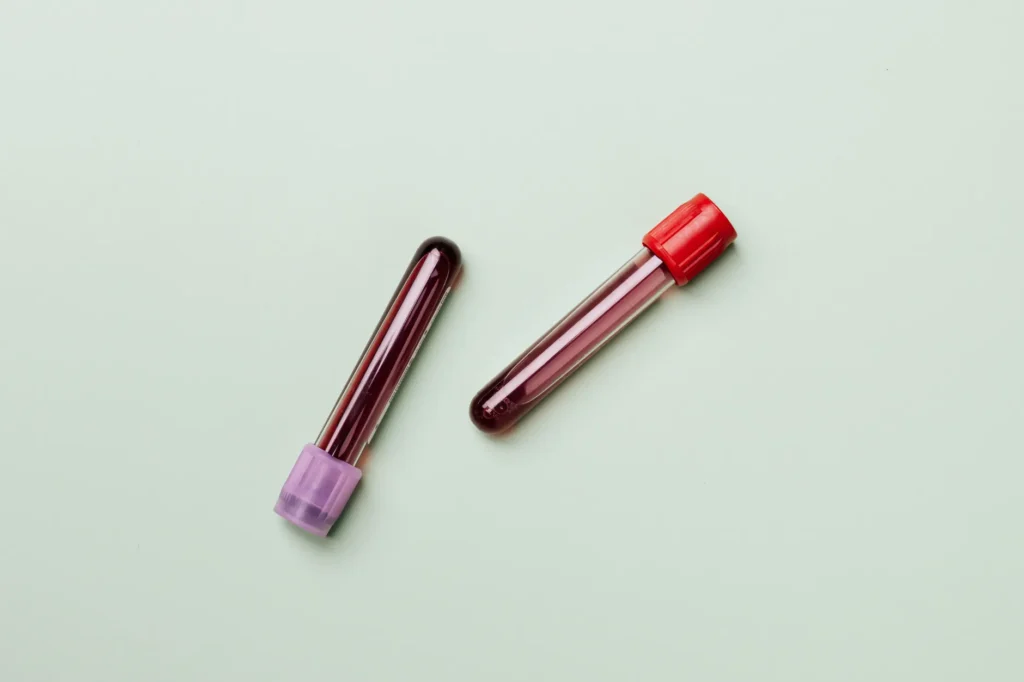
LDL cholesterol is a lipoprotein that carries cholesterol from the liver to the body’s cells, and its excess encourages plaques to build up in the artery wall. That is why it is commonly nicknamed the bad cholesterol, as opposed to HDL, which makes the opposite journey. A high level, measured in grams per litre of blood, is not a symptom you feel: you find it on a lipid panel, often by chance, during a routine check requested by a GP.
You may have received a blood test with an LDL line in bold and a red arrow, without anyone really explaining what that result means for you at forty-five or fifty. The figure worries you all the more because it often arrives with no warning sign at all, in a body that seems to work normally. This article explains how that marker forms, which thresholds to remember, and above all which concrete levers let you act without waiting for a systematic drug prescription. It is aimed at the person who wants to understand before deciding, not at the person looking for a miracle answer.
How does an excess of LDL cholesterol form?
The liver makes most of the cholesterol circulating in the blood, with food supplying only a minority share in most people. LDL acts as the vehicle that carries that cholesterol to the cells that need it, notably to make hormones and cell membranes. The problem arises when the amount produced or absorbed exceeds the body’s capacity to recycle it properly. Excess LDL particles end up infiltrating the inner wall of the arteries, where they oxidise and trigger a local inflammatory reaction. That reaction attracts immune cells which, in trying to clean up the area, paradoxically help thicken the deposit. The process unfolds over decades, silently, with no pain and no perceptible discomfort. That slowness makes the marker misleading: you feel perfectly well while the artery wall gradually stiffens. To go further, the core tests of a prevention panel are detailed by the School of Longevity.
Several factors influence how much LDL is produced or badly cleared. Genetics plays a real role in some people, notably in familial hypercholesterolaemia, an inherited form that strongly raises the level from an early age and requires specific medical follow-up, as a reference publication on heterozygous familial hypercholesterolaemia sets out. Outside that particular case, a diet high in saturated fat, a sedentary life, abdominal excess weight and insulin resistance weigh heavily in the balance. Chronic stress and poor-quality sleep also disrupt lipid metabolism in a less well-known but very real way. These factors add up rather than cancel each other out, and that explains why two people of the same age can show very different profiles.
Age itself is an independent aggravating factor. Over the years, cholesterol metabolism slows down, and the liver receptors responsible for capturing circulating LDL become less effective. In women, the menopause often accentuates that trend because of the drop in oestrogens, which played a protective role on the lipid profile. In men, the gradual fall in testosterone after forty often comes with a similar shift in the metabolic panel, a subject covered in our article on the fall in testosterone after 40. Understanding these mechanisms lets you approach the subject without fatalism, because most of the factors listed remain changeable through daily action.

Which LDL thresholds should you know?
Reference thresholds vary with each person’s overall cardiovascular risk, not with a universal figure valid for everyone. An adult with no other risk factor generally aims for an LDL below 1.6 grams per litre, while someone with diabetes or a previous cardiovascular event will look for a stricter target, often under 1 gram per litre. Those thresholds are set by the doctor according to the whole clinical picture, not only an isolated laboratory result. A reference study published in the Journal of the American College of Cardiology showed that prolonged exposure to lower LDL from early in life significantly reduced the risk of coronary heart disease, which underlines how much duration of exposure matters as well as the level at one point in time, as this Mendelian randomisation analysis reports.
The overall context of the panel counts for more than reading a single line on its own. A high total cholesterol accompanied by a good HDL level and controlled triglycerides does not tell the same story as a high LDL combined with low HDL and borderline blood sugar. That is why a doctor often calculates a ratio or an overall risk score rather than stopping at a raw figure. Our article devoted to reading the lipid panel as a whole details how to interpret LDL, HDL and triglycerides in relation to each other.
A recent review of the global prevalence of lipid disorders confirms that these imbalances affect a large share of the adult population, well beyond people who are visibly overweight, as this systematic review on the prevalence of dyslipidaemias shows. In practice, that means a lipid panel is worth requesting regularly after forty, even with no symptom and no apparent excess weight, since the marker stays silent until a stage that is often advanced.
| Marker | Unit | Optimal zone | Warning zone | Source |
|---|---|---|---|---|
| LDL cholesterol, low risk | g/L | Below 1.6 | Above 1.9 | Med Clin North Am, 2012 |
| LDL cholesterol, high risk | g/L | Below 1.0 | Above 1.3 | Med Clin North Am, 2012 |
| Total cholesterol | g/L | Below 2.0 | Above 2.4 | J Health Popul Nutr, 2025 |
| Protective HDL | g/L | Above 0.5 | Below 0.4 | J Health Popul Nutr, 2025 |
What role does inflammation play in cardiovascular risk?
Inflammation profoundly changes how an isolated LDL level should be read, because a lipid deposit only becomes dangerous when it oxidises and triggers a local inflammatory reaction in the artery wall. A major publication in the New England Journal of Medicine, based on thirty years of cardiovascular follow-up in women, showed that combining a high inflammatory marker with a high LDL multiplied the risk far more than either factor taken separately, as this study on inflammation and cardiovascular risk sets out. That result changes how you read a panel: two people with the same LDL can carry a very different risk depending on their general inflammatory state.
That low-grade inflammation, often called silent, is measured with specific blood markers and stays linked to overall lifestyle far more than to diet alone. Insufficient sleep, unmanaged chronic stress and long sedentary stretches maintain an inflammatory terrain that amplifies the impact of LDL cholesterol on the arteries. Our article on silent inflammation and how to spot it on a blood test explains how to identify that terrain before it becomes a problem. Acting only on LDL without treating the associated inflammation means treating half the problem, and that explains why some people with moderate LDL remain exposed despite an apparently reassuring figure.
In our programme work, we regularly meet people who arrive with a lipid panel their doctor considers normal, but with persistent fatigue and a diffuse sense that something is wrong. A closer look sometimes reveals an active inflammatory terrain, invisible on the LDL measurement alone, which explains that fatigue better than cholesterol itself. That kind of situation shows why a full panel, including inflammatory markers and not only lipid ones, gives a more accurate reading of real risk and of the priorities to put in place.

How do you act on your LDL cholesterol in practice?
Diet remains the most accessible lever for acting on LDL, provided you target the right changes rather than cutting out all fats indiscriminately. Reducing the saturated fats found in cured meats, excess butter and processed products is the first step, replacing them with unsaturated fats from olive oil, nuts and oily fish eaten two to three times a week. Soluble fibre, found in oats, pulses and certain fruits, captures part of the cholesterol in the gut before it is absorbed. Regular physical activity, particularly strength work combined with cardiovascular exercise, improves the body’s capacity to recycle circulating LDL, a mechanism documented in a meta-analysis comparing resistance and aerobic exercise, available through this systematic review on exercise and metabolism. Two strength sessions a week are already enough to produce a measurable effect over several months.
Pierre, 16, first came for persistent fatigue despite sleep his family considered correct and days with no particular effort that nonetheless left him exhausted. The panel showed an LDL of 1.45 grams per litre, combined with a slightly low HDL of 0.42 grams per litre, a discreet profile but one to watch at his age. We put three precise adjustments in place: two strength sessions a week, a daily portion of pulses at lunch, and replacing butter with olive oil for cooking. After twelve weeks, the new panel showed LDL down to 1.28 grams per litre and HDL up to 0.47 grams per litre, a gradual shift that confirms the relevance of the adjustments chosen without being a guaranteed result for any other situation.
Sleep and stress management complete those two main levers, often neglected even though they directly influence the liver’s cholesterol production. Less than six hours of sleep a night, repeatedly, disrupts the hormonal regulation involved in lipid metabolism, a subject explored in our article on sleep after 45. Cardiac coherence, practised a few minutes a day, offers a simple tool to reduce the chronic stress that sustains both inflammation and excessive cholesterol production by the liver.
Should drug treatment always be considered?
No, drug treatment is not systematic and depends on the level of overall cardiovascular risk established by the doctor, not only on the isolated LDL figure. For someone with no history and with low to moderate risk, a period of three to six months of lifestyle change is often proposed before considering a statin or any other lipid-lowering treatment. That approach makes it possible to measure the real effect of dietary and physical adjustments on a new blood panel, without rushing a prescription that commits you over the long term. A medical summary published in Medical Clinics of North America reminds us that the protective effect of a lowered LDL remains proportional and gradual, which justifies a stepped approach rather than a single threshold applied uniformly to every profile.
For people at higher risk, particularly with a family history, diabetes or a personal cardiovascular event, drug treatment remains a medical decision that is only discussed with a cardiologist or a GP. It is never a choice to make alone from an internet read, however well informed. In those situations, lifestyle change remains relevant alongside treatment, it does not replace it. A structured programme is precisely what lets the two approaches coexist without opposition, in coordination with existing medical follow-up.
Duration of exposure to high LDL counts as much as its level at one point, and that means acting early, even moderately, produces a cumulative effect over several years. That is the whole point of regular follow-up rather than a one-off reaction to a single laboratory result. A panel repeated every six to twelve months, together with tracking other metabolic markers such as blood sugar and blood pressure, gives a far more reliable picture than the one-off worry sparked by a single red figure on a report.

What links are there with the rest of your metabolism?
LDL cholesterol never works in isolation, it sits within a metabolic whole in which blood sugar, blood pressure and muscle mass interact continuously. High fasting blood glucose encourages the formation of smaller, denser LDL particles, recognised as more atherogenic than standard LDL particles, and that worsens risk even at a comparable total LDL level. Our article on the fasting blood glucose thresholds to know details that often underestimated interaction. In the same way, the loss of muscle mass linked to age, called sarcopenia, reduces the body’s capacity to use glucose and circulating lipids, creating a circle that gradually worsens the overall metabolic profile if nothing is done to slow it.
The gut microbiome also plays an increasingly documented role in cholesterol metabolism, notably through the production of certain bile acids that influence its absorption in the gut. An unbalanced microbiome, often linked to a diet low in fibre and high in ultra-processed products, can therefore contribute indirectly to a higher LDL than diet alone would justify. Our article on the gut microbiome and longevity explores that mechanism in detail. This whole-body view explains why an isolated approach, focused only on LDL without looking at the rest of the picture, rarely produces lasting results.
The good news lies in how coherent these mechanisms are: acting on diet, physical activity and sleep improves several markers at once, not only LDL on its own. That is why a full panel, tracked over time, gives a far more useful picture than a single isolated check. Before acting alone on the basis of one figure, the first step is to have your whole metabolic picture objectified with a professional, so as to prioritise the levers that really matter for your situation rather than guessing. Booking a full assessment lets you set that initial diagnosis before any decision to act.
Sources
- Inflammation, Cholesterol, Lipoprotein(a), and 30-Year Cardiovascular Outcomes in Women, N Engl J Med, 2024
- Global prevalence of dyslipidemias in the general adult population: a systematic review and meta-analysis, J Health Popul Nutr, 2025
- Effect of long-term exposure to lower low-density lipoprotein cholesterol beginning early in life on the risk of coronary heart disease: a Mendelian randomization analysis, J Am Coll Cardiol, 2012
- Resistance exercise versus aerobic exercise for type 2 diabetes: a systematic review and meta-analysis, Sports Med, 2014
- Heterozygous Familial Hypercholesterolemia, Circulation, 2016
- LDL cholesterol: the lower the better, Med Clin North Am, 2012
Going further
- low HDL, the other signal on the lipid panel
- LDL and HDL read together rather than in isolation
- when every value is normal but pressed against the ceiling
Frequently asked questions
What exactly is LDL cholesterol?
LDL cholesterol is a lipoprotein that carries cholesterol from the liver to the body’s tissues. When it circulates in excess, it can infiltrate the artery wall and form deposits that gradually stiffen it. That is why it is sometimes nicknamed the bad cholesterol, as opposed to HDL, which carries it back to the liver.
Why is LDL cholesterol called the bad cholesterol?
The name comes from its role in forming atheroma plaques. Unlike HDL, which cleans the arteries, excess LDL settles there and triggers a local inflammatory reaction. The term remains a useful but imperfect simplification, because the overall context of the panel counts as much as the isolated figure.
Is a high LDL always dangerous for your health?
Not systematically on its own, but risk rises with duration of exposure and the other associated factors, such as blood pressure, blood sugar or smoking. A single high figure deserves to be discussed with a doctor rather than feared alone, because the overall clinical context guides the decision to act or not.
How long does it take to bring LDL cholesterol down?
The first changes often appear between eight and twelve weeks after a lasting change in diet and physical activity. A new blood panel at that point measures the real movement. Consistency counts for more than the intensity of a one-off effort isolated in time.
Should you stop all fatty foods to bring LDL down?
No, the common mistake is to ban all fats instead of distinguishing their nature. Excess saturated fats are the problem, while unsaturated fats from olive oil or oily fish help balance the lipid panel. The overall quality of the diet matters more than cutting out a whole category.
What should you do after receiving a panel with a high LDL?
The first step is to discuss it with a doctor to place that figure in your overall health context. Then a structured programme on diet, physical activity and sleep lets you act on the changeable levers. A new panel a few weeks later objectifies the progress made.
Latest from the blog
Read next
 Omega 3: benefits for inflammation and immunity
Omega 3 benefits for inflammation and immunity: mechanisms, biological thresholds, mistakes to avoid and a clear plan for busy executives.
Read the article
 Omega-3: which foods to favour against inflammation
Omega-3 is found mainly in oily fish from cold seas, such as sardines, mackerel, herring and salmon, and in certain…
Read the article
 Low HDL cholesterol: what it says about metabolism
Low HDL cholesterol means a level below 1 gram per litre of blood in men and 1.2 grams per litre…
Read the article