
VO2 max: understanding and improving your cardio
VO2 max refers to the maximum amount of oxygen your body can take up, transport and use during intense effort, expressed in millilitres of oxygen per…
By Benjamin Sant · Updated 6 October 2026
VO2 max refers to the maximum amount of oxygen your body can take up, transport and use during intense effort, expressed in millilitres of oxygen per kilogram of body weight per minute. The higher that value, the more efficiently your heart, lungs and muscles work together, and the better your body tolerates effort without exhausting itself. This figure does not only measure your sporting level: it reflects the state of your cardiovascular system as a whole, and several studies link it to all-cause mortality risk. A VO2 max that falls year after year, without you paying attention, often reflects a silent loss of cardiorespiratory capacity, the one that comes before breathlessness on the stairs or fatigue after a simple sprint to catch a train.
You may have taken up physical activity again after several sedentary years, or you may run regularly without ever knowing whether your heart is really improving. You climb two floors and you are out of breath, when ten years ago it would not even have crossed your mind. That feeling is not only a question of age: it reflects a measurable decline in aerobic capacity, often accelerated by the lack of structured training rather than by passing time. Understanding what VO2 max actually measures, knowing how to estimate it without a laboratory, and above all knowing what to do concretely to make it improve, that is the difference between a training habit that maintains and one that builds a real cardiovascular reserve for the decades ahead.
How is VO2 max calculated exactly?
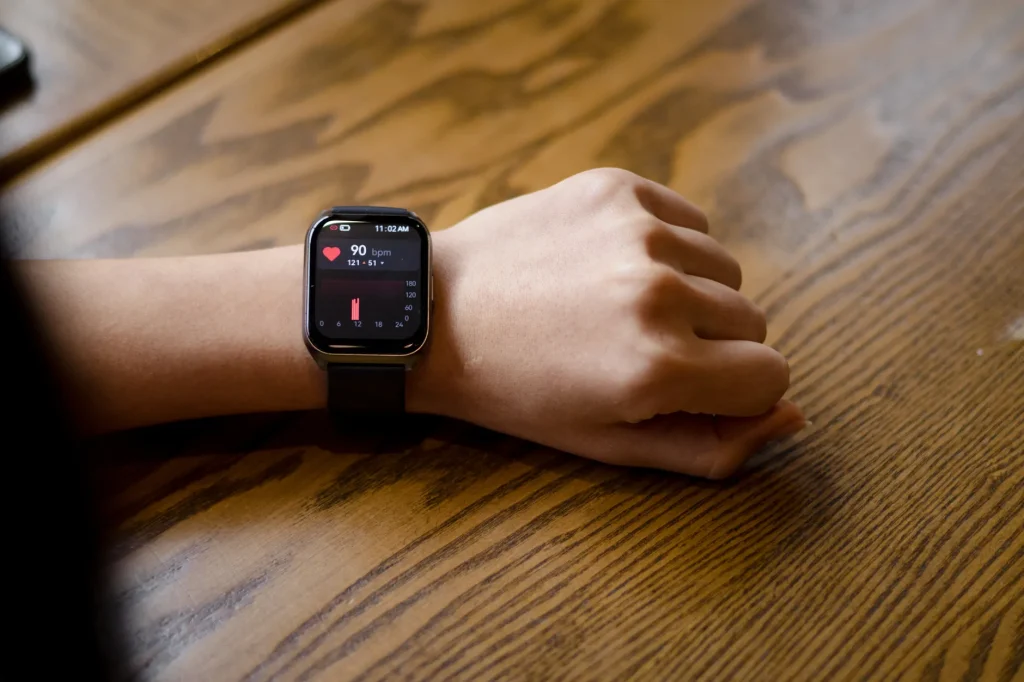
VO2 max is measured in a laboratory by a progressive exercise test on a treadmill or a bike, during which you breathe into a mask connected to a gas analyser that measures the oxygen consumed and the carbon dioxide produced at each intensity step. Intensity increases in stages until voluntary exhaustion, and the point where oxygen consumption stops rising despite increasing effort marks your maximum value. This protocol remains the scientific reference, but it requires specialised equipment that is rarely available outside sports physiology centres or some sports cardiology practices. Outside the laboratory, several smartwatches and apps offer an estimate of VO2 max based on heart rate, running speed and sometimes heart rate variability.
That estimate remains approximate, with a margin of error that can reach several points depending on the model and on the consistency of the data collected. It still has real value for tracking a trend over time: if your watch shows a stable value over several months, then a gain of two or three points after a quarter of structured training, that signal means something even without absolute clinical precision. Field protocols also exist, such as the Cooper test, which consists of running as far as possible in twelve minutes, or the Léger-Boucher shuttle test, long used by strength and conditioning coaches to estimate aerobic capacity without heavy equipment. A study published in Sports Medicine documented how endurance training durably changes the parameters of aerobic fitness, confirming how sensitive this indicator is to structured training, The effect of endurance training on parameters of aerobic fitness. To go further, the real place of zone 2 in the distribution of intensities is detailed by the School of Longevity.
For an executive getting back into activity after a break, the point is not to obtain a perfect number but a reliable trend. Measuring your resting heart rate every morning, noting your times over an identical route each month, and cross-checking that data with your watch’s estimate gives a picture solid enough to adjust training. A laboratory test remains useful once a year for people who want a precise reference, particularly with a family history of cardiovascular disease or when returning to sport after several years of complete inactivity. In that case, medical advice before increasing intensity remains the simplest precaution to take.
Which VO2 max values are considered good?
Reference values vary widely with age, sex and training level, which makes any raw comparison between two people fairly meaningless without those criteria. In a sedentary 45-year-old man, a value around 35 to 40 millilitres per kilogram per minute corresponds to average fitness, while a regularly trained man of the same age often exceeds 45 to 50. In women, reference values are generally 10 to 15 per cent lower at comparable age and training level, because of known physiological differences in muscle mass and blood volume. These reference points are not strict medical thresholds but statistical zones that let you place yourself and set a realistic progression target over several months.
The natural decline of VO2 max with age is documented and progressive, with an acceleration often seen after 50 in people who reduce their physical activity. A review published in Reviews in Endocrine and Metabolic Disorders showed that regular physical activity acts directly on body composition and exercise capacity, two major determinants of that decline, Physical activity and exercise for weight loss and maintenance in people living with obesity. That decline is not a mechanical inevitability, however: it depends largely on the training level maintained, far more than on the number of years gone by. A 55-year-old man who has run regularly for twenty years often keeps a higher VO2 max than a sedentary 35-year-old, which shows how much maintaining cardiorespiratory capacity weighs more than age alone in this equation.
The table below gives general reference points to place your own value, bearing in mind that an isolated figure matters less than its trajectory over time. These zones should be read with caution: they do not replace medical advice if you have doubts about your cardiovascular state, particularly if you feel unusual discomfort during effort.
| Marker | Unit | Optimal zone | Alert zone | Source |
|---|---|---|---|---|
| VO2 max, trained man aged 40-49 | ml/kg/min | 45 to 52 | under 35 | Eur J Prev Cardiol, 2016 |
| VO2 max, trained woman aged 40-49 | ml/kg/min | 38 to 45 | under 30 | Eur J Prev Cardiol, 2016 |
| VO2 max, trained man aged 50-59 | ml/kg/min | 40 to 48 | under 32 | Eur J Prev Cardiol, 2016 |
| VO2 max, trained woman aged 50-59 | ml/kg/min | 35 to 42 | under 28 | Eur J Prev Cardiol, 2016 |
| Resting heart rate | beats/min | 50 to 65 | over 80 | Inserm, heart attack file |
How do you actually improve your VO2 max?
VO2 max improves mainly through intensity work, structured and repeated over several weeks, more than through accumulating long comfortable sessions. Interval training remains the best documented method: alternating short phases at high intensity, between 85 and 95 per cent of maximum heart rate, with active recovery phases, directly challenges the mechanisms that determine oxygen transport and use. A typical session can consist of six to eight repetitions of three minutes at a sustained pace, separated by two minutes of recovery, repeated twice a week. A study published in the European Journal of Preventive Cardiology established a dose-response relationship between the volume of controlled endurance training and improved cardiorespiratory fitness in sedentary older adults, confirming that consistency counts as much as intensity, Dose-response relationship of cardiorespiratory fitness adaptation to controlled endurance training in sedentary older adults.
Base endurance training, at a moderate, conversational pace, remains useful as a complement: it builds the aerobic base and speeds up recovery between intensity sessions. The frequent mistake among busy executives is doing only moderate sessions, comfortable but not stimulating enough to generate measurable cardiovascular adaptation over several months. Conversely, multiplying intense sessions without sufficient recovery exhausts the nervous system and stalls progress instead of speeding it up. A reasonable balance combines one or two interval sessions a week, one long outing at a moderate pace, and one or two days of full recovery or strength work, which indirectly supports exercise capacity by limiting peripheral fatigue.
Nutrition and some supplements have also been studied for their effect on endurance, with results more nuanced than marketing language sometimes suggests. A systematic review published in Nutrients examined the effect of nitrate-rich beetroot juice on cardiorespiratory endurance in athletes, with results varying according to initial training level, Effects of Beetroot Juice Supplementation on Cardiorespiratory Endurance in Athletes. A Systematic Review. A meta-analysis published in Critical Reviews in Food Science and Nutrition looked at creatine and its effect on VO2 max, concluding that the effect is limited and mostly indirect, through maintaining muscle mass rather than through aerobic capacity itself, Creatine supplementation and VO(2)max: a systematic review and meta-analysis. Structured training therefore remains the most reliable lever, far ahead of any supplement.
Can a low VO2 max reveal a health problem?
A low VO2 max does not automatically indicate a disease, but it almost always reflects cardiovascular deconditioning that deserves attention, especially when it comes with breathlessness that is unusual for simple efforts. You sometimes arrive with a normal blood panel and fatigue that will not lift, with no obvious explanation on paper. This is a common situation in people who have gradually reduced their physical activity without realising, as work diaries pile up, and whose cardiorespiratory capacity declined silently for several years without any alarming symptom. Disproportionate breathlessness, palpitations during effort or an abnormally long recovery after moderate effort justify a cardiology opinion before any intensive return to sport.
Chantal, 49, a restaurateur, came to consult because she felt breathless climbing the stairs of her restaurant several times a day, a new sensation for her, and she could not understand where that fatigue came from. Her assessment showed a resting heart rate of 78 beats per minute, rather high, and an estimated VO2 max of 28 millilitres per kilogram per minute, below the expected zone for her age. We set up two weekly 30-minute interval brisk walking sessions, one 20-minute moderate-intensity session on an exercise bike, and sleep follow-up to limit the night awakenings that were worsening her daytime fatigue. After twelve weeks, her resting heart rate had dropped back to 70 beats per minute and her estimated VO2 max had risen to 32, a modest gain but consistent with regular training over that period.
In people with chronic respiratory disease, the relationship between VO2 max and prognosis becomes even more marked. A meta-analysis published in Annals of Medicine studied the effect of different exercise protocols on the prognosis of patients with chronic obstructive pulmonary disease, confirming that structured training significantly improves exercise capacity even with established respiratory disease, Effects of different exercise regimens on prognosis of patients with chronic obstructive pulmonary disease: a systematic reviews and meta-analysis. That does not mean every breathlessness hides a lung disease, but that medical follow-up remains useful as soon as breathing discomfort persists beyond what training alone explains. A full assessment, including the markers of biological age, often places fatigue in a broader context than breathlessness alone.
Do the heart and arteries play a role in VO2 max?
The heart and arteries determine a large part of VO2 max, since the ability to pump and distribute oxygenated blood to the muscles directly conditions aerobic performance. A trained heart pumps more blood with each beat, which makes it possible to reach the same exercise intensity with fewer beats per minute, hence the lower resting heart rate often seen in trained people. Arteries, for their part, must stay supple to adapt to pressure variations during effort: excessive arterial stiffness, favoured by sedentary behaviour, chronic inflammation or some metabolic imbalances, mechanically limits the amount of blood reaching the working muscles. Inserm, the French national institute for health and medical research, notes in its file on myocardial infarction that overall cardiovascular health rests on that balance between cardiac function and vascular elasticity, Myocardial infarction file, Inserm.
Chronic stress also weighs on this machinery, through less visible but very real pathways. Persistently high cortisol favours vascular inflammation and can disrupt heart rate regulation, which indirectly reduces the room for VO2 max improvement even in people who train regularly. Working on nervous recovery, for example through slow breathing exercises, usefully complements a cardiovascular training programme, especially in executives under a high mental load. Cardiac coherence has a concrete value here, by lowering the reactivity of the sympathetic nervous system and making faster recovery possible between two intensity sessions.
The link between muscle mass and cardiovascular capacity also deserves highlighting, because the two often change together after 50. Age-related muscle loss reduces overall metabolic demand and can mask a parallel decline in VO2 max, the two phenomena worsening each other if nothing is done. Strength work twice a week, combined with cardiovascular work, therefore indirectly supports aerobic capacity by maintaining functional muscle mass able to use the oxygen transported. This dimension connects to the issues covered around sarcopenia and muscle strength, two subjects that overlap widely with that of cardiorespiratory capacity in people over 45.

How long does it take to see progress?
The first measurable cardiovascular adaptations generally appear between four and eight weeks of regular training, with a clearer improvement in resting heart rate before the estimated VO2 max changes noticeably. That gap is explained by the fact that nervous and metabolic adaptations are established faster than structural cardiac adaptations, such as an increase in stroke volume. A gain of three to five millilitres per kilogram per minute over three months of structured training remains a realistic goal for someone starting from a moderate level, based on two to three weekly sessions well split between intensity and base endurance. Beyond six months, progress naturally slows, and the challenge becomes more about maintaining what you have gained than continuing to climb indefinitely.
Consistency counts more than raw intensity in this equation. Two sessions a week maintained over six months generally produce better results than alternating intense periods followed by several weeks of complete stop, a frequent pattern in executives whose work diary fluctuates strongly with the seasons. A busy calendar does not prevent structuring a minimum of coherent cardiovascular training, provided you accept sessions that are sometimes shorter but regular, rather than long occasional ones. This question of training volume compatible with a busy working life is covered in more detail in our article on the number of training sessions a week after 45, which offers concrete reference points according to the time genuinely available each week.
Tracking your progress also requires patience with natural variation. A bad night, a late meal or an episode of work stress can make a smartwatch’s VO2 max estimate fluctuate by several points from one week to the next, without that reflecting a real regression. What matters is the trend over two to three months, not the one-off variation. To objectify that progress reliably, a structured assessment with repeated measurement of the same markers at regular intervals separates statistical noise from real change, and that is precisely the aim of a programme that re-measures biomarkers over time rather than relying on a single isolated measurement. Booking an assessment sets a precise starting point before you begin that deeper work.
Sources
- The effect of endurance training on parameters of aerobic fitness, Sports Med, 2000
- Physical activity and exercise for weight loss and maintenance in people living with obesity, Rev Endocr Metab Disord, 2023
- Effects of Beetroot Juice Supplementation on Cardiorespiratory Endurance in Athletes. A Systematic Review, Nutrients, 2017
- Creatine supplementation and VO(2)max: a systematic review and meta-analysis, Crit Rev Food Sci Nutr, 2023
- Effects of different exercise regimens on prognosis of patients with chronic obstructive pulmonary disease: a systematic reviews and meta-analysis, Ann Med, 2024
- Dose-response relationship of cardiorespiratory fitness adaptation to controlled endurance training in sedentary older adults, Eur J Prev Cardiol, 2016
- Myocardial infarction file, Inserm
Going further
- living long and living in good health, two different trajectories
- how many sessions to keep up when the diary is already full
- what VO2 max predicts, and how much it improves with training
- the documented doses of physical activity for longevity
- VO2 max and longevity: the inconvenient truth
Frequently asked questions
What exactly is VO2 max?
VO2 max is the maximum amount of oxygen the body can take up, transport through the blood and use in the muscles during intense effort, expressed in millilitres of oxygen per kilogram of body weight per minute. It reflects the combined efficiency of the heart, lungs and muscles, and is one of the best indicators of a person’s overall cardiorespiratory capacity.
What is the average VO2 max for a 45-year-old man?
A sedentary 45-year-old man generally has a VO2 max between 35 and 40 millilitres per kilogram per minute, while a regularly trained man of the same age often exceeds 45 to 50. These values remain indicative and vary with training level, genetics and each person’s sporting history.
Is a low VO2 max dangerous for your health?
A low VO2 max is not dangerous in itself, but it often reflects cardiovascular deconditioning associated with a higher risk of fatigue, breathlessness and, according to several studies, higher all-cause mortality in the long term. In case of unusual breathlessness or palpitations, medical advice is still recommended before any intensive return to sport.
How long does it take to improve your VO2 max noticeably?
The first improvements generally appear between four and eight weeks of regular training, with a gain of three to five millilitres per kilogram per minute possible over three months for someone starting from a moderate level. Consistency of sessions counts more than their one-off intensity for obtaining lasting progress.
Do you need to run every day to improve your VO2 max?
No, running every day is neither necessary nor desirable, because recovery between sessions conditions progress as much as the effort itself. Two well-structured weekly sessions, alternating high-intensity intervals and moderate base endurance, generally produce better results than a poorly distributed daily volume.
How can you measure your VO2 max concretely without a laboratory?
A smartwatch provides a rough estimate based on heart rate and running speed, useful for tracking a trend over time. Field tests such as the Cooper test, which consists of running as far as possible in twelve minutes, also offer a simple estimate without specialised equipment.
Latest from the blog
Read next
 Osteoporosis: which treatment fits your profile
Osteoporosis is treated by combining medication, prescribed by a doctor according to the measured bone density, with muscle strengthening work…
Read the article
Sarcopenia: understanding age-related muscle loss
Sarcopenia refers to the gradual loss of muscle mass and strength that settles in with age, silently, long before any…
Read the article
 Osteoporosis and sarcopenia: the muscle link
Osteoporosis is not simply isolated bone fragility: it almost always progresses alongside a loss of muscle mass and strength, a…
Read the article